Showing posts with label Power. Show all posts

Wednesday, June 8, 2016

Thoughts on the Tao Te Ching 66


Poem 66

All streams flow to the sea
because it is lower than they are.
Humility gives it its power.

If you want to govern the people,
you must place yourself below them.
If you want to lead the people,

you must learn how to follow them.

The Master is above the people,
and no one feels oppressed.
She goes ahead of the people,
and no one feels manipulated.
The whole world is grateful to her.
Because she competes with no one,
no one can compete with her.

Commentary


Malahide Estuary


We don't have to be in anyway astute to know that leadership is a difficult skill, or even set of skills.  Having been a teacher all my life, my only leadership role has been at classroom or at Year Head levels. Working with and leading adults is an area in which I have little experience.  However, I am old enough now to have "worked under" many leaders and to have observed and experienced many leadership styles.  Without a doubt we mostly abhor the autocratic or authoritarian style of leadership.  Who wants to be told what to do on a daily or even hourly basis? The opposite was the case - total lack of leadership - once in our school when a principal only lasted less than a year as the job was far beyond his capabilities. Luckily, the man realised this quite quickly and luckily got his old job back in the school from which he had come.  Anyway, all order and discipline disappeared in the school over night. Thankfully, this was just a slight hiccup in my 30 years in that school and all other leaders have been more or less satisfactory, with one outstanding leader.


Malahide Estuary

I have never studied leadership, but I would hazard the following qualities of good leadership from observation and experience or length of years on this earth: (i) good vision of where the organisation is going, (ii) good motivator, (iii) good listener, (iv) enthusiasm for the job, (v) knows his/her staff well - whether X, Y or Z will suit this or that job, (vi) can delegate and allow everyone to take ownership of their area without wanting to control things - in other words, she or he will never be a micro-manager.  I have experienced a more junior head of department who could never let go the reins of control and insisted on controlling everything.  In the end of course, such leaders don't control anything and things spiral into disorder, (vii) a good problem solver - able to deal with multiple problems at a time, and consequently be good at comparmentalising things (viii) has to have a hard skin, that is, they have to rise above the situation and learn never to take things personally.  If one puts oneself forward for a position in authority one has to learn to take citicism.  It has been my experience, and I take it that of most of the readers of this small blog, that leadership invariable attracts criticism by its very nature.  Everyone wants someone to blame, a quick scapegoat to blame all problems on.  Finally (ix) s/he who is a leader needs a very good sympathethic and empathethic deputy leader with whom they can share their problems, insights and vision.  Now, these are mere observations as the result of my life experience in my particular place of work, and bear in mind that I have never studied the aea of leadership ever.

In the above poem, I particularly love the image of the sea as the centre of power, and my goodness what a powerful phenomenon it it.  We all know that all life emerged aeons ago from the watery slime of our seas and oceans.  Without the oceans and seas there would simply have been no life as we know it.  The sea or the ocean consequently has always been a central symbol in all mythologies and cultures.  In psychoanalytical or Jungian terms the oceans or seas represent the great Unconscious, a source of much of our psychic lives.  Then, the image of all lesser water bodies, rivers and lakes and so on - the rivers all flow into the seas while the other water bodies are connected with the oceans historically and geologically in ways this writer could never understand.  However, what I am getting at here is the powerful imagery of all this for good leadership.  The leader, according to the Tao is the sea or the ocean and the workers are the rivers that flow into it.  Our poet tells us that the sea lies at a lower level to allow such an inward flow.  In this sense its power is very natural, and indeed a very humble one.  Interestingly the etymology of the work "humble" is "humilis" which means lowly or low lying.

One of my favourite all time quotes comes from Albert Camus, an atheist.  (Indeed, contrary to general belief, atheists do have a spirituality in the broadest sense of that term, obviously not in the religious sense of it.  See the marvellously comprehensive blog called Spirituality Ireland HERE.) The quotation reads: "Don't walk behind me; I may not lead. Don't walk in front of me, I may not follow. Just walk beside me and be my friend."  Strangely enough - or maybe not that strangely as we are all human, no matter what our beliefs - the idea of accompanying others is central to spiritual guidance, counselling and chaplaincy.   This is more or less the sense of the final stanza above.  The Master is more a companion on the journey, and yet a leader who always wields an encouraging power, a power which at base is empowering of others.


The Master is above the people,
and no one feels oppressed.
She goes ahead of the people,
and no one feels manipulated.
The whole world is grateful to her.
Because she competes with no one,
no one can compete with her.

Sunday, April 10, 2016

Thoughts on the Tao Te Ching 61

Poem 61


When a country obtains great power,
it becomes like the sea:
all streams run downward into it.
The more powerful it grows,
the greater the need for humility.
Humility means trusting the Tao,
thus never needing to be defensive.

A great nation is like a great man:
When he makes a mistake, he realizes it.
Having realized it, he admits it.
Having admitted it, he corrects it.
He considers those who point out his faults
as his most benevolent teachers.
He thinks of his enemy
as the shadow that he himself casts.

If a nation is centered in the Tao,
if it nourishes its own people
and doesn't meddle in the affairs of others,
it will be a light to all nations in the world.


Commentary

As a frequent traveller I am well used to having my identity checked at passport control or immigration counters as one enters various countries.  In these days of growing terrorist problems worldwide, our identity, and proof of it, was never more important.  Also, if we are users of the Internet, as most of us are now, we also realise that identity theft is a singularly common crime, so must must protect ourselves against that as much as we possibly can.

The beautiful Synogogue in Prague, February, 2016
It seems to me as a Special Needs Teacher and a part-time psychotherapist ans counsellor in a secondary school that one of the most sacred things that I do is to help any individual pupil come to acceptance of his identity (I hasten to add that I teach in an all-boys school, hence my use of male possessive adjective here), to come to realise that the fostering and development of one's own self is the most precious task each of us is charged with as a person. Therefore, coming to an awareness of our real identity is very important for every one of us.

In Ireland, we are celebrating the centenary of the beginnings of our young nation in the Easter Rising/Insurrection of 1916.  There have been many books, journals, magazines and commemorative pamphlets, running into hundreds at this stage, dedicated to this centenary celebrati0n - indeed, our own school has produced two such pamphlets.  To state this in other terms, one could truthfully say that our young nation is engaged in the task of coming to terms with its own identity.  Who are we as a young Irish nation? Where stands the vision of those men who first proclaimed the Irish Republic?  Has their vision of true equality for all "the children of the nation" been actually achieved?  We are, then, at present dealing with this and other questions in our commemorative ceremonies, in the many learned commentaries given, in the books written, in all the various media outlets - written, broadcast and digital - and such activity has been a rewarding exercise for us as a nation as individuals.

Artist at work, Firenze, summer 2002
Our Taoist poem speaks about power and about powerful nations.  Ireland is most certainly not a powerful nation, and yet she has power over her own people, can represent them internationally at the EU and at UN fora.  Power in the hands of evil men can lead to much destruction both of people, animals, the goods of the earth and the work of human hands as we have witnessed in the twentieth century.  Matthew White reports in his Historical Atlas of the Twentieth Century, 2010 that the number of deaths by war and oppression during that period amounted to some 203 million human beings.  One wonders as to what the destruction of animals (mainly horses) and property amounted to - a figure I should prefer not to know as I'm sure it would be mind-bogglingly huge.  As the English Catholic politician and historian Lord Acton famously observed: "Power tends to corrupt and absolute power corrupts absolutely. Great men are almost always bad men."  The statistics quoted confirm that statement.  Power corrupts individuals because of their selfish and worldly-driven and ambitious egos, and it is no wonder then how much more  power actually corrupts whole nations.  The second part of his famous quotation most definitely can be related to such men as Hitler and Stalin and the many hundreds of other despots the world has known since the beginnings of civilization.


Lord Acton, 1834 - 1902
Power, our Taoist poet recommends must always be accompanied by the virtue of humility if it is not to fulfill Lord Acton's famous statement about power quoted in the previous paragraph. Humilty has always been widely viewed as a central virtue in many religions and spiritualities deriving therefrom, and indeed in many philosophic traditions.  It has also often been counterpointed or contrasted with such vices as narcissism, "hubris" and other forms of pride. Humility, needless to say, is related to the adjective "humilis" that can be translated as humble and it is a virtue that became very much abused in Roman Catholic circles over the years where novices in religious orders, and women in particular were called upon to be self-abnegating to such an extent that they might have had a far too low opinion of themselves, perhaps even a low level of self-esteem and consequently very little apreciation for their real selves. However, the Latin word "humilitas" also has a link with the word "humus" which means "earth" or "clay." Hence humility, which obviously entails a certain level of ability to put the ego in its rightful place, also encompasses a sense of being "grounded" and "earthed."  It is this sense of the word that I feel the Taoist poet has in mind in the above quoted lines.

Being grounded and earthed means being able to admit that one does not have all the answers; that the ego has to take its place along with the heart, empathy and compassion as just one motivating factor in our lives; that there is no one right way to live life or any one simple answer to complex problems and that truth is rarely pure and never simple (Oscar Wilde); that everyone makes mistakes and that the admission of them is truly ennobling of the humble person who is always willing to learn.

Individuals as well as nations, then, are called upon by our Taoist poet to be humble, to be earthed, to be grounded, that is to be centered in the Tao.


Thursday, November 19, 2015

Thoughts on the Tao te Ching 24


Poem 24

He who stands on tiptoe
doesn't stand firm.
He who rushes ahead
doesn't go far.
He who tries to shine
dims his own light.
He who defines himself
can't know who he really is.
He who has power over others
can't empower himself.
He who clings to his work
will create nothing that endures.

If you want to accord with the Tao,
just do your job, then let go.

Commentary

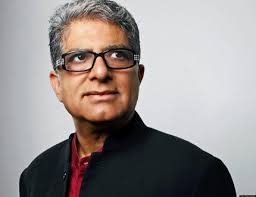
Deepak Chopra: Author, Spiritual Guide, Medical Doctor

Wisdom is bought at a high price - the price of experience.  We all essentially learn the hard way. How often have we heard our elders say that they went to the "school of hard knocks!"  One of my special needs students said the following the other day:  "Life does not get any easier; you just have to learn to laugh harder!"  Pure wisdom, that! The poetry, whether of the Psalms in the Old Testament or the poems in the Tao Te Ching, attempts to capture some wisdom by sheer dint of paradox or seeming contradiction; by setting up polar opposites; by stretching language to its breaking point.

Sometimes when we try too hard we don't achieve the results we want at all.  It's as if the ego gets in its own way and trips itself up.  The ego stretches itself up on tippy toes in a vain effort to see what's going on.  However, on a physical level, as we know, we are only able to maintain our bodies on tippy toes -  in such a stretched mode - for literally several moments as we strain say to look over a high fence.  On tippy toes we simply cannot stand firm. Anyone who runs or jogs will know that such exercise needs to be paced properly.  If the runner or jogger sets out on their chosen route at far too quick a pace. he will not be able to complete it in the proper time or indeed in the proper state of well-being.  Hence, the lapidary piece of wisdom in the above poem: "He who rushes ahead doesn't go far!"  I remember an old teacher I had at school used often say: "The longest way round is often the shortest way home!"  Why?  Well, the longest way round might not have as many obstacles as the shortest way!!
  
Clinical psychologist, Psychotherapist Dr Carl Rogers


I simply love the line: "He who tries to shine dims his own light."  Again, it appears to this reader and meditator that this is all about our ego getting in the way of the wisdom that naturally lives in our True Self (Deepak Chopra) or Real Self (Carl Ransom Rogers), in our Soul (religion/spirituality) or in our Heart of Hearts (traditional phrase meaning inner and true feelings).  It is so obvious when people are boasting of their abilities or attempting to get "one up" on us (one upmanship) or pretending to be something they are not.  Likewise, any person who thinks he can define himself clinically or precisely is simply deluded.  Just as the author puts it, this person "cannot know who he really is."  There is a mystery that lies at the heart of us all and we only gradually get to know that mystery.  Indeed, I believe we cannot really comprehend, apprehend or grasp that mystery in its entirety or fullness.  However, we do get glimpses of our True Self.

Then we come to one of the most corrupt impulses of the ego, namely the drive for power.  Persons who do not know themselves properly, or who have failed, as Carl Jung puts it, to properly integrate their shadow nature, all project their worst fears and hatreds onto others.  Hence we get breakdowns in the various relationships between husbands and wives, managers and staff, leaders and teams and indeed between different states.  When people exercise power over others in this egoic way they actually have failed to empower themselves to simply be their truest selves.  Likewise, if we cling to our work in an effort to gain some identity, we set up a state of dependence on our workaday activity to give us a sense of our true self and such a state of dependence only leads to a false sense of self!

Letting go is the answer, and indeed it is the answer given by all religious and spiritual traditions. What are we asked to let go of?  We are asked to let go of our Ego, of our desires to cling to sensual pleasures, to cling to others, to cling to ideas, to cling to our partners, to cling to our jobs, to cling to our pride, to cling to all false ideas of who we are.  We are asked, in short, to let go of the False Self and embrace our True Self.  This is not easily done, but by constant practice of meditation and other spiritual acts like writing, composing poems or music, sculpting, pottery making and so on and so forth, we gradually chip away at our masks and bit by bit expose our True Self to the light of our consciousness.  Indeed, none of us ever gets there.  Rather like the asymptote we only get there way out at infinity.

Example of two asymptotes: horizontal and vertical


Conclusion:

Once again, perhaps some word, phrase or clause in above poem strikes a chord with you.  If so why not use it as a mantra for a short meditative practice for five or ten minutes.  Namaste, my friends.

Sunday, October 18, 2015

Thoughts on the Tao Te Ching 17

17

When the Master governs, the people
are hardly aware that he exists.
Next best is a leader who is loved.
Next, one who is feared.
The worst is one who is despised.

If you don't trust the people,
you make them untrustworthy.

The Master doesn't talk, he acts.
When his work is done,
the people say, "Amazing:
we did it all, all by ourselves.


Commentary


A. Lincoln: a great Leader
These stanzas of the seventeenth poem are a reflection on good leadership and all that it entails.  Over a 35 year career I have observed many leaders at work in a school setting.  The best leaders amongst them worked away unobserved most of the time and they achieved much. The worst of them were micro-managers seeking to control others.  Managers who were into control and power, or to put it in other words, were obsessed with their own EGO were disliked, caused acrimony among the staff and achieved little.  The above poem is a very perspicacious and wise comment on the style of a good manager where the term "Master" can be substituted easily with the word "manager." 


Conclusion

Once again I invite the reader of this blog to read over the above poem meditatively and to pick out a favourite word or phrase and to use the same as a mantra for a short period of reflection, say five or ten minutes.  Namaste, friends.

Tuesday, August 25, 2015

Thoughts on the Tao Te Ching 9

Poem 9

Fill your bowl to the brim
and it will spill.
Keep sharpening your knife
and it will blunt.
Chase after money and security
and your heart will never unclench.
Care about people's approval
and you will be their prisoner.

Do your work, then step back.
The only path to serenity.


Commentary/Reflections

As we grow in age and wisdom, we realise that there is such an attitude as trying too hard. Search too hard for something and we will never find it.  Over-train for a race or a match or whatever and we fall short of winning.  Trying too hard reveals a certain compulsion and indeed a definite fear of failure.  While much hard work is necessary for any achievement that is worthwhile in life, overwork will spoil it in some way - perhaps even by ruining our health in the process.  Look at a skilled football player, a professional runner or swimmer and we notice a certain ease  as well as the hard work necessary for success.


There is an old Zen story that tells of a learned Professor who travels to see a famous Guru in order to find an insight into life.  The Guru welcomes the professor with great generosity and starts by asking him if he would like some tea.  The professor readily agrees and accepts a china cup and saucer while the old Guru boils the water.  The professor holds forth his cup for it to be filled when the water is boiled and the tea made, but when pouring the tea for the professor the Guru keeps pouring until the tea flows over the side of the china cup.  The professor leaps back in disgust declaring: "Why are you over-filling the cup?"  The Guru's reply is most perceptive and goes something like this: "My dear Professor, you are like the filled cup.  You are so full of your own opinions that there is no room for those of others!" This little Zen story captures a similar thought as the opening lines in the above Taoist poem.

Once again, the poem is also very much about the Second Noble Truth of Buddhism, namely that our clinging to and over-dependence on things are the main causes of suffering in life. Again, hopefully as we age and grow in wisdom we will realise that having more and more does not necessarily lead to happiness.  When we are young we want that big house or apartment, that lovely shiny car, that beautiful wife and family, success and promotion as the ego-driven world would have us desire.  If we are wise we will realise that all these things do not necessarily bring us happiness.  The above stanzas invite us to stop endlessly chasing and craving either things or success as the world would demand, and recommend that we sit back and let go, let life and let love, as it were.

Moreover, there is nothing as enslaving as doing things to achieve the approval of others. Nobody's approval is necessary to our self-esteem unless of course we are talking about a child in the family or a student at school which is a far different thing anyway.  Indeed, I have often heard  wise people say: "Nobody can ever have any power or control over you unless you give them permission to exercise it in the first place."  I suppose we only learn this wisdom as we age.


No matter what our work, it is important to have pride in it; to do it to the very best of our ability.  And yet, this Taoist poem recommends that even then we need to put some distance between ourselves and our achievements.  We have to step back from them and let them go, too.  After all, they too will pass, as will we as time will inevitably prove.

To conclude, once again I invite you to read the above poem reflectively yet again.  Any line, phrase or word that strikes you, let it act as a mantra as you meditate for five or ten minutes.

Namaste, friends.

Thursday, February 20, 2014

Journal of a Soul 44

And What or Who Keeps you Going?

That is a good question indeed.  Especially when some people give up on life, while others apparently, no matter how tough life is for them, manage somehow to "keep on keeping on." In case you don't know the provenance of those last several words, they come from a song of Bob Dylan called Tangled Up In Blue.  That song is one of my favourites from the pen of Bob Dylan as it has haunting lyrics which show the deep inner longing of a drifter for love, companionship or meaning in his life.  Interestingly, Dylan mixes past, present and future tenses in this song with consummate ease, with an readiness of transition that is magical. Indeed he changes person, too, from verse to verse, even changing the "I" of the first verse to "he" and "she" in his later concerts.  But that only adds to the magic, wonder and beauty of this wonderful song.  Lest I lose my path in this post, I had better curb my musical passions here, and point out that the phrase "keep on keeping on" is an important one for me that shows the strength, persistence and determination of the traveller or wayfarer in life. Now let me turn my attention to the question posed in the title of this post.  What, indeed, you may ask, keeps me going?  Let me attempt to list those reasons in no particular order.

1. My Job.  

I remember Pat Kenny, one of our foremost broadcasters here in Ireland, remarking that he was lucky as his hobby became his profession.  He was luckier still as he is currently the best paid broadcaster in the country at 66 years of age.  While few of us can boast the contentment Kenny talks about, some of us do get immeasurable satisfaction from our work.  At the moment, I count myself one of those lucky souls.  Not that my job was always that rewarding.  It's just that I was lucky to realize that m  y job was driving me crazy at 48 and I decided to change track.  In all of that, self-awareness is of utmost importance. There is simply no sense in staying in a job that is soul-destroying.  So I retrained as a Resource and Special Education teacher and left the main stream classroom to begin working with autistic boys, mainly those with Asperger's Syndrome in the area of Social Skills and Communications.  I also do learning support in Mathematics for the school at large.  This is all extremely rewarding work as I can see the results of my labour on a daily basis.  I suppose the big thing in this work on a personal level is simply being needed.  That is why being unemployed leads to such depression in the lives of those afflicted with that dreadful problem.

2. My Creative Outlets

Creativity can never be underestimated as it is literally the food of the soul if I may use a metaphor.  Ever since I can remember I have been a writer, and over the years I have had many bits and pieces published here and there.  In these more recent days I have been engaged in blogging.  This latter has been a soul-saver for me as it allows me to instantly publish online the ideas and, more correctly and importantly, my concerns online.  I also write poems in two languages, English obviously, and then, also, in my native tongue, Gaeilge or Gaelic or as it is more commonly called Irish.  By writing, I am engaged in getting to know myself better, and consequently becoming more contented.  If one reads and writes poems as I do, then you will appreciate that poetry does not really sell, that getting published is difficult to say the least.  However, I remind myself often, as one poet wisely counselled me once, that it is more important that a person writes a poem than that many people read it.  If only a few others read it, in a writing group or in some community setting, then that is the reward.

Other creative outlets are reading, listening to music, travelling and going out with friends. Lest this become like a boring list of my hobbies as would appear on a CV, let me proceed onto the next point.

3. My Spirituality or Religion 

In more recent times, religion has become a somewhat sullied word, while spirituality has become a more positive one.  In my young day, I remember the good things about religion: (i) the sense of wonder evoked by what seemed to me as a child to be very colourful and dignified services, (ii) the sense of a mystery or something divine beyond me, (iii) the beauty of the Latin language and of the hymns and (iv) the sense of the unity within the community. I have long ceased to be a practising Catholic, but I can still tap into some of those old feelings when I attend funerals, baptisms, and Christmas and Easter services.  

However, secularization has long since consigned the role of religion in Ireland to the periphery of life.  As well as a more secularized society, there were indeed intrinsic and endemic problems within the Catholic Church itself.  Those problems in short were the corruption of power and the abuse of that power through allowing child abuse by clerics to go unchecked.  One of the most crippling aspects of any organised religion is the abuse of power. It happens in all and every religion, and let none of us forget that.  Such happens in every human organization: there will always be people who hunger for power and control over others, and they will use every doctrine under the sun to hang onto that power so that they can use it and abuse it.  In every human organization, be it church, state, government, medicine, law, or any other one, those who hunger for power will manage to get their way into the top echelons.  It is only now - in the last ten or so years - that we here in Ireland are properly watching and checking all professions. It is a truism that needs repeating that no organization can monitor or check itself Here I recall that old Latin quotation attributed to Juvenal:  "Quis custodiet ipsos custodes?" "Who will guard the guards?" A question still worth asking 2000 years later.

Like the Dalai Lama, the smile on Pope Francis' face says it all!!
Religion, uncoupled from spirituality, is a mere power structure that aims at controlling people, at least in certain people's hands.  That's why the election of Pope Francis was/is one of the more prophetic things that have happened in the Roman Catholic Church in the past 50 years.  For me, as for many Catholics, Francis is on a par with another prophetic Pope, namely John XXIII who inspired and opened the historic and prophetic Vatican II.   It was not by chance that Jorge Mario Bergoglio chose Francis as his name as pontiff, as St Francis was the apostle of the poor and unfortunate, with a deep commitment to ecology.  It is more than apparent by his actions that Pope Francis is a highly spiritual man who loves ministering to the poor, and all his actions speak of one with a deep conviction and commitment to Christian principles.  In short, he is Christlike, not church-like!  And there lies the difference between him and  his immediate predecessor. Here is an interesting post written by an unusual but firmly believing (non-Catholic) Christian on why he admires Pope Francis:  Boeskool.com.  His comments are really worth reading and I have signed up to be a member of his blog: they boil down to the fact that Pope Francis is Jesus-like, that is he is more interested in spirituality and in acting like Jesus than in the power structures of the Church.  He is an old man of 77, but his spirituality allows him to walk, smile, talk, and obviously think and feel like a far younger man,  Maybe, just maybe, this man can turn the tide for the Roman Catholic Church, but he must be meeting some opposition within its power structures.  Unfortunately, that is why the bigger Churches are losing so many members: they are too petrified literally - "petrified" means stone-like, unmoved and unmoving.  That is where and how power corrupts, and boy does it corrupt no matter where frail human beings belong.  Finally, it is no wonder to this writer at least that Pope Francis is a Jesuit, one of the foremost orders in the Roman Catholic Church who truly believe in discerning the signs of the times, in discerning their own relationship with Christ and with humanity as a whole.

Spirituality for this writer is all about connection or connectedness with all of creation, which obviously includes other humans.  It is about union with whatever power or spirit runs through the heart of this universe and keeps it "together."  It has involved me in community work, in helping others through the Society of St Vincent de Paul and so on.  It inspires me to meditate and do yoga practices with others.  It also inspires me to read spiritual classics from all traditions.  That's what I love about these modern times where pluralism is more important than uniformity.  I remember a scholar once informing me that unity never means uniformity, and I have never forgotten that piece of wisdom.  (Interestingly Pope Francis realizes that as he says that even atheists can get into heaven if they live moral lives. Mind you, he's only repeating the teachings of Vatican II here!) No matter what religion one belongs to, even none, everyone has a spiritual sense.  I will write later in these posts about the spirituality of atheism, and indeed this topic has been written about by a few scholars in more recent years.

And what is it all about?

I will finish this rather meandering post with this question as it was one put to me when I was only 22 and a young teacher beginning my career.  I was so innocent and "green about the gills" back then that it is almost embarrassing to remember the way I was.  However, such is life and such is the cost of experience.  Anyway, one morning a man called Ger Smith asked me that question.  I was too young and too busy to take the man seriously, far too caught up in my own little world.  It was only some three years later when I had learnt that Ger had died from a congenital heart condition that none of us his colleagues ever knew about at the time., that I realized the import of Ger's question both for him and indeed for all thinking and feeling beings.  If you like, that question, along with legions of others over the years, opened up a giant unknown world to me, a world of infinite questions seeking answers or at least seeking better forms of questions as Rev Dr. Patrick Wallace used to put it back in the day.  Really good and deep questions open us up to mystery and never confusion.  And mystery, as they say, is an ocean we dive into, and never ever a wall against which we bash our cognitive heads. And so to Ger, RIP, I owe a debt of gratitude for opening up the vistas of mystery to me all those years ago.  I do hope that someone somewhere holds you in their heart.