Showing posts with label Light. Show all posts

Thursday, November 19, 2015

Thoughts on the Tao te Ching 24


Poem 24

He who stands on tiptoe
doesn't stand firm.
He who rushes ahead
doesn't go far.
He who tries to shine
dims his own light.
He who defines himself
can't know who he really is.
He who has power over others
can't empower himself.
He who clings to his work
will create nothing that endures.

If you want to accord with the Tao,
just do your job, then let go.

Commentary
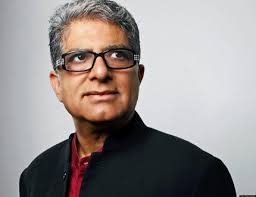
Deepak Chopra: Author, Spiritual Guide, Medical Doctor

Wisdom is bought at a high price - the price of experience.  We all essentially learn the hard way. How often have we heard our elders say that they went to the "school of hard knocks!"  One of my special needs students said the following the other day:  "Life does not get any easier; you just have to learn to laugh harder!"  Pure wisdom, that! The poetry, whether of the Psalms in the Old Testament or the poems in the Tao Te Ching, attempts to capture some wisdom by sheer dint of paradox or seeming contradiction; by setting up polar opposites; by stretching language to its breaking point.

Sometimes when we try too hard we don't achieve the results we want at all.  It's as if the ego gets in its own way and trips itself up.  The ego stretches itself up on tippy toes in a vain effort to see what's going on.  However, on a physical level, as we know, we are only able to maintain our bodies on tippy toes -  in such a stretched mode - for literally several moments as we strain say to look over a high fence.  On tippy toes we simply cannot stand firm. Anyone who runs or jogs will know that such exercise needs to be paced properly.  If the runner or jogger sets out on their chosen route at far too quick a pace. he will not be able to complete it in the proper time or indeed in the proper state of well-being.  Hence, the lapidary piece of wisdom in the above poem: "He who rushes ahead doesn't go far!"  I remember an old teacher I had at school used often say: "The longest way round is often the shortest way home!"  Why?  Well, the longest way round might not have as many obstacles as the shortest way!!
  
Clinical psychologist, Psychotherapist Dr Carl Rogers


I simply love the line: "He who tries to shine dims his own light."  Again, it appears to this reader and meditator that this is all about our ego getting in the way of the wisdom that naturally lives in our True Self (Deepak Chopra) or Real Self (Carl Ransom Rogers), in our Soul (religion/spirituality) or in our Heart of Hearts (traditional phrase meaning inner and true feelings).  It is so obvious when people are boasting of their abilities or attempting to get "one up" on us (one upmanship) or pretending to be something they are not.  Likewise, any person who thinks he can define himself clinically or precisely is simply deluded.  Just as the author puts it, this person "cannot know who he really is."  There is a mystery that lies at the heart of us all and we only gradually get to know that mystery.  Indeed, I believe we cannot really comprehend, apprehend or grasp that mystery in its entirety or fullness.  However, we do get glimpses of our True Self.

Then we come to one of the most corrupt impulses of the ego, namely the drive for power.  Persons who do not know themselves properly, or who have failed, as Carl Jung puts it, to properly integrate their shadow nature, all project their worst fears and hatreds onto others.  Hence we get breakdowns in the various relationships between husbands and wives, managers and staff, leaders and teams and indeed between different states.  When people exercise power over others in this egoic way they actually have failed to empower themselves to simply be their truest selves.  Likewise, if we cling to our work in an effort to gain some identity, we set up a state of dependence on our workaday activity to give us a sense of our true self and such a state of dependence only leads to a false sense of self!

Letting go is the answer, and indeed it is the answer given by all religious and spiritual traditions. What are we asked to let go of?  We are asked to let go of our Ego, of our desires to cling to sensual pleasures, to cling to others, to cling to ideas, to cling to our partners, to cling to our jobs, to cling to our pride, to cling to all false ideas of who we are.  We are asked, in short, to let go of the False Self and embrace our True Self.  This is not easily done, but by constant practice of meditation and other spiritual acts like writing, composing poems or music, sculpting, pottery making and so on and so forth, we gradually chip away at our masks and bit by bit expose our True Self to the light of our consciousness.  Indeed, none of us ever gets there.  Rather like the asymptote we only get there way out at infinity.

Example of two asymptotes: horizontal and vertical


Conclusion:

Once again, perhaps some word, phrase or clause in above poem strikes a chord with you.  If so why not use it as a mantra for a short meditative practice for five or ten minutes.  Namaste, my friends.

Sunday, November 8, 2015

Thoughts on the Tao Te Ching 21

Poem 21

The Master keeps her mind
always at one with the Tao;
that's what gives her her radiance.

The Tao is ungraspable.
How can her mind be at one with it?
Because she does not cling to ideas.

The Tao is dark and unfathomable.
How can it make her radiant?
Because she lets it.

Since before time and space were,
the Tao is, 
It is beyond is and is not.
How do I know this is true?
I look inside myself and see.

Commentary

The Yin Yang is perhaps one of the most known of the symbols of Taoism.  It is a symbol made up of two halves that together make wholeness. Yin and Yang are also the starting point for change. When something is whole, by definition it is unchanging and complete. So when you split something into two halves – into its Yin  and its Yang, it upsets the equilibrium of wholeness. This starts both halves chasing after each other as they seek a new balance with each other. As you will notice from the diagrammatic representation of this symbol one half of the circle is white (or Yin = masculine, logic, head and so forth) with a small black dot (that is a small amount of the Yang = feminine, feelings, heart and so on); the other half is black or dark (or Yang = feminine, feelings, heart and so on) with a small white dot (that is a small amount of Yin = masculine, logic, head and so forth).  It is interesting to note that the word "Yin" comes out to mean the “shady side” or mysterious side of something like the dark side of the moon and Yang “sunny side” or bright side of something.  

It is also worth noting that neither Yin nor Yang are absolute in themselves alone. In short, nnothing is completely Yin or completely Yang. Each aspect contains the beginning point for the other aspect. For example: day becomes night and then night becomes day gradually as one welcomes the other to the fore and vice versa. Yin and Yang are interdependent upon each other so that the definition of one requires the definition for the other to be complete. And so in keeping with this healthy tension of opposite our translator links two sexual poles male and female in calling the "Master" a she, i.e., in referring to "her mind."  Also the Tao or its truth is ungraspable in its entirety.  This Master is "at one" with the Tao insofar as she does not "cling to (hard and set) ideas."  Another polarity is that of the Tao's being dark and mysterious on the one hand and yet fully radiant on the other.  Here we are at the very heart of what the Yin Yang symbol represents - the complexity and mysteriousness at the very heart of existence.  Another opposing pair in this spiritual reality is "is" ("being") and "is not" ("non-being").

Man contemplates life on Monasterace Beach, August 2015


Looking inside is no mere navel-gazing or solipsism as meditation requires one to check one's experiences with those of the community of meditators, with the various traditions and their teachings to which the meditator belongs in the first place.  Wisdom arises or is experienced within a culture or a community and simply cannot be accessed alone. (Here, I am not, of course ruling out the thrust towards eremitism as this latter only occurs when the hermit has been fully schooled within the community in the first place: all hermits break away from monasteries or sanghas where they first learnt to meditate with a master in a community setting.)

Once more, by way of conclusion, I invite the reader to reflect contemplatively on the above short poem.  Perhaps a word or a phrase or a line may suggest itself to you as a mantra for a short five or ten minutes meditation here.

Namaste, Shalom, Peace!!

Friday, June 27, 2014

Journal of a Soul 59

Nothing New Under the Sun


Heron in Malahide Estuary recently
Sometimes, it's very hard to write something new, something vibrant, something with an edge.  It's so easy to write trite, hackneyed or banal things about anything, but possibly easier still to write such things about spirituality or about the soul, simply because they belong to a more nebulous and mysterious, if not mystical area of experience.  In my senior years in secondary (high) school, I was very much taken with the rather skeptical remarks from the Old Testament writer Qoheleth who opined just exactly what's stated in my above heading - that indeed most things were thought about or tried before, and so on. A lecturer I had at college many years ago - a brilliant theologian and indeed philosopher - always recommended that if we are to be good scholars we should always deploy a healthy skepticism about anything we read. Obviously we could also use the same tactic with regards to anything we encounter in life. Needless to say, we are quite liable to be duped if we don't employ such basic tactics.

The Spiritual Entrepreneurs: A Word of Warning

What would we do without the simple worker bee?
Recently, I have engaged in some on-line courses that promote spiritual development, and indeed, they have been good for the most part - life-enhancing, positive, and all promoting good sound mental health practices.  I have had no problems with them myself because I still employ that old healthy skepticism recommended by both Qoheleth and my erstwhile, sadly now departed, lecturer.  It seems to me that most of these organizations that are promoting these on-line seminars are very good. I will mention none of these by name as I feel they are providing a legitimate service, and also perhaps my own healthy skepticism may at times be somewhat unfounded, though I suspect not.  (In other words, the philosopher in me asks if I am ever skeptical about my own skepticism!)  What I have noticed is that while these organizations provide some authoritative sources for their claims, promote very good healthy practices - both physical and mental - and quote many recent scientific surveys, they can at times be somewhat prone to slip in rather unfounded promises in the midst of more obvious and scientifically based fact: the easy route to happiness, how to increase one's wealth almost without effort if only the listener or viewer will just sign up to this or that package of on-line courses that will give them the key to success.  Now, as I have stated, most of the courses that I have tasted are impressive for the most part, but then rather subtly insert some impossible promise like total personal transformation, gaining the potential to become a millionaire, or to increase the length of one's life rather substantially in one case.  I'm not against spiritual entrepreneurs and many of them are superb, but one has to be aware of the ones that get that little bit more woolly in their thinking and that little bit more hyperbolic and exaggerative in their claims as they hook and reel in their bait.  They will do this, I believe, slowly and subtly. All I can say is that I accept most of their stuff in good faith, but fall back on my friend "healthy skepticism" when money is involved.  Again, I'm not obviously against paying for downloads of conferences and good solid books, of which I have many.  Nor am I against paying high prices for attending good conferences on spirituality/psychology or for attending extended courses with good solid speakers.  I just feel we must not shut off our intellect when we put our spiritual senses into gear!  I believe in Head (Intellect) and Heart (Feelings and the non-cognitive) - both/and, and never either/or.  Either/Or alone is a human being flying on one wing who will crash to earth all too soon.

The Struggle that is Life

Having trod the soil of Mother Earth for some 56 years now, I have never yet met anyone who has easy solutions to the trials and tribulations either of their own life or that of their friends, colleagues or acquaintances.  Indeed, I shut off my listening apparatus immediately if I do encounter such individuals in my daily life.

The people I encounter in my life comprise real human beings with long lists of strengths and failings.  Just to go through some problems I encountered in others recently in my job as a teacher in an Autism Unit attached to a Secondary School and in colleagues, acquaintances and friends: lack of self-esteem, over-control, ego-tripping, micro-management, bullying, exaggeration, catastrophizing, depression, drug addiction, alcohol addiction, family breakdown, schizophrenia, stress, behavioural difficulties - ADD, ADHD, ODD - suicide, Sudden Adult Death Syndrome, gambling addiction and so on and on. Even people who appeared on the surface to be successful individuals all had one skeleton or other health-wise or problem-wise in their lives.  In my lived experience, there are no easy solutions that trip off the tongue.  There is the listening ear, the compassionate acceptance of others, the offer of practical help or where to get such help.  In my growing understanding of life, both personally and professionally, the solutions if they are there are ones that happen in a community  and family setting where the person can be helped to feel more wanted and more accepted and more belonging to that community.  There are no easy solutions, but gradual supports can be put in place to help the individual cope.

Metaphor of Plant   

Flowers: Marley Park
Metaphors and images speak more profoundly and clearly to the human psyche.  Let me use the metaphor of plant here, and I borrow it from my reading of the great twentieth century counsellor Carl Ransom Rogers.  He had started out with an interest in general science and horticulture and later moved into psychology and psychotherapy.  Hence, he opined once that his clients were like plants that needed all the supports (or nutrients to sustain the metaphor) the gardener (metaphor for counsellor or significant other) could provide: care, compassion, empathy, congruence or authenticity and so on.  Otherwise, the client simply would not grow - instead, like a badly watered plant, s/he will have stunted growth or will wilt and eventually die. 

Fragility

Fragility is another thought that comes to mind.  As a poem-maker I love reading poems and writing them.  One of my favourite poets is the late great Gaelic poet Seán Ó Ríordáin who wrote mostly philosophical/spiritual poems about the meaning and purpose of life as he saw it.  Many of them were reflections on the mental and physical pain he suffered as a person who had Tuberculosis for most of his life.  He spoke of "leochaileacht na beatha", that is "the fragility of life."  The other morning I knocked a shade from the spray of lights in my sitting room and that shade smashed into smithereens (a real Gaelic word that found its way into the English language by the way).  Life is like that: things break.  Worse than that: people break, too.  That's a horrible experience of which I have written much in this and other blogs. Hence, I have always found flowers placed on or before altars, or before statues, or at shrines, or simply in abundance at the place where someone tragically died to be most moving.  They are saying something very profound about our fragility.  In fact placing such flowers is an potent ritualistic act that acknowledges our own fragility and mortality.

Candle Light

The lights of Howth Village, June, 2014
Candle light is another image that comes to my mind.  I have always loved the old Chinese saying that it is better to light one candle than to curse the darkness.  Likewise, I have often lit candles in churches (and still do, even though I am not a church-goer in the sense of attending mass at all) when someone is ill.  In our fragility such ritualistic acts are intra-psychically and inter-psychically potent.  It was always a custom in Gaelic Ireland to place a lighted candle in the window at Christmas time as a sign to all that the stranger is welcome within.  These days candles are replaced by stands of electric lights. Light can be at once fragile (easily blown out) and powerful beyond measure (can cause a tragic fire for example).  Perhaps the profound message here is one of fragility and potential power at one and the same time.  

Mindfulness

There is very little to be said here by way of conclusion except to issue the invitation to all, and also indeed to myself, to be mindful of the polarities of fragility and potential, the weakness and the power of life.  Let us cherish and protect it.  Let us light the candles of welcome and hope and smell the flowers of our small and big successes.  In all this let us shut our ears to false and easy promises that deny life rather than accept it in its sheer fragility and potential.

Monday, May 26, 2014

Journal of a Soul 55

Embracing the Magic of Hope


When I use the word "magic" here, I am in no way using it in its restricted, perhaps more correct, understanding of actions connected with manipulating normal things or forces by paranormal methods.  I am, of course, using it in its broadest sense to suggest everything that evokes wonder, beauty, mystery and love in the human soul.  In a world where destruction is more often than not the hallmark of human interaction, we need the magic of hope more than ever.  One would want to be a strong individual not to grow depressed when one even cursorily views the history of humankind where wars and crimes against humanity so obviously abound.  One would want to be equally courageous in viewing the international news which is virtually filled with accounts of the destruction of humans by other humans: from Afghanistan, Somalia, Nigeria, Pakistan, Egypt, Syria, Iraq, Central African Republic and South Sudan where there are 1000+ deaths per country per year (See Here and Here)  to the destruction of our very own worldly home, namely Mother Earth, our lovely Blue Planet.

Ring-tailed lemur, Dublin Zoo, May 2014
The longer I live the more passionate I am becoming about the need to inspire hope in others.  There are too few great leaders who are doing so today in the political world.  The two most outstanding leaders to my mind, in a more spiritual context, who are attempting to cast the magical spell of hope over a very destructive, greedy and hateful world are such wonderful leaders as Pope Francis I and the Dalai Lama.  Other leaders who impress me from the political world are Aung San Suu Kyi of Myanmar, Desmond Tutu of South Africa and Kofi Annan.  For the life of me, I cannot think of very many more.  President Clinton still impresses me with his commitment to world peace and peace in Northern Ireland, as does the wonderful President Jimmy Carter who is constantly working for peace all around the globe. These are all leaders who inspire hope. Another group of committed "retired" leaders that much encourages the present writer are The Elders and you can read all about their wonderful work for peace here

As a teacher, I find that often many of our youngsters are lacking in hope.  In the wake of the downfall of the infamous Celtic Tiger, a growing number of people are mired in negativity that can all to often descend into the lower reaches of desolation and despair. Many pupils who attend our inner city working class school cannot see very much in the way of promise for their future lives. In Ireland as I write, there have been so many cutbacks, so much austerity that the presence of the Labour Party - who are partners in a Coalition Government with a centre-right party called Fine Gael - has been virtually wiped out on town councils all around Ireland.  The Labour Party has been adjudged by the electorate to have so much compromised, or indeed sold out on, their socialist principles that the voters virtually ignored voting for any of their candidates.  A very disillusioned and dejected voting public opted instead for independents and candidates from other parties, most especially Sinn Féin.

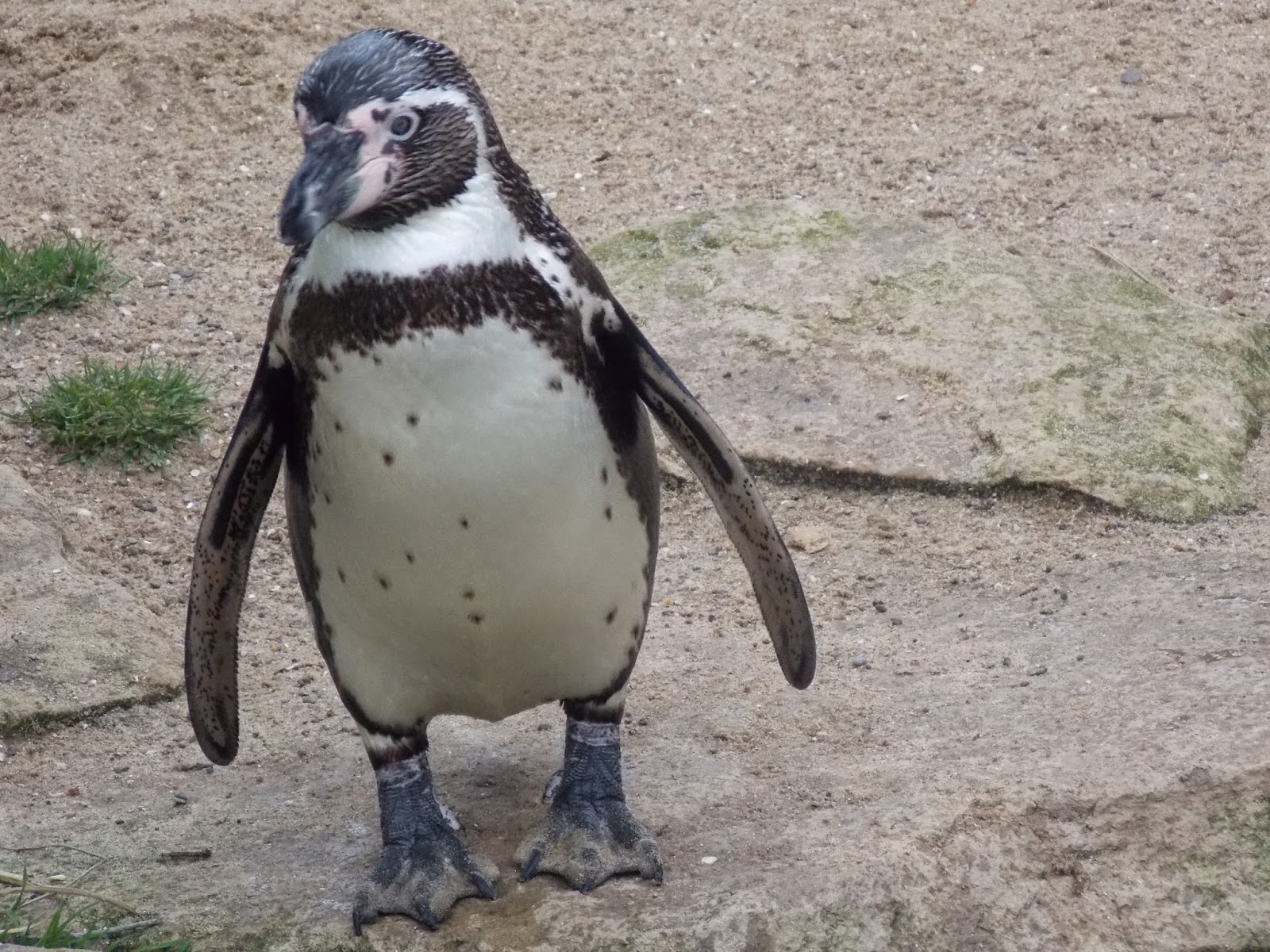
"Pp...pp. pick up a penguin," at Dublin Zoo, May 2014
One boy who comes to me for counselling suffers from a sort of low-grade depression for which he is taking sessions from a qualified psychologist in a local hospital.  I work with him once a week.  He is representative of a growing number of young people who seem to be somewhat bereft of hope.  In our sessions, we constantly talk about choosing life and hope, not despair and death.  Recently a young female contact (I never like the use of the word "friends" for "contacts" on this social network as it is a definite misnomer that can cause some young people an amount of anguish if they are deleted or blocked or even bullied by another so called "friend.") on Facebook put up a rather depressing status including the symbol of the skull: "It's mad knowing the only thing we actually are promised in life, is death I do have meself (sic) freaked to bits thinking about it!" Indeed, I notice that FB has become a sort of diary for many of our young people where they reveal their hearts to an oftentimes disinterested public.  As I say, I have my doubts about how helpful FB can be in mental health matters, but that is a debate for another post.

Attracted to the Light

It is indeed a truism to say that we are attracted to the light and repulsed by the dark. For the most part, we are all intuitively attracted by the light in good people.  Generally, it has been my experience that really good people are innately attractive, e.g., Martin Luther King, Mother Teresa, Pope John XXIII, Pope John-Paul II and in more recent times Pope Francis I.  I have named many others above in my opening paragraph.  I leave it to you, all you good loyal readers out there, to name your own attractive world political and spiritual leaders.  Essentially, such leaders share much with the historical Jesus and the equally historical Siddhartha Gautama (the Buddha), St Francis and all the present day great spiritual leaders (as distinct from Religious Leaders.  I will be contentious here by stating that I believe that Pope Benedict XVI was a Religious Leader while Pope Francis is a Spiritual Leader). I believe that the great contemporary religious writer and theologian Karen Armstrong is also an attractive spiritual leader.  Her books are widely read and she has been universally honoured for them.*

We must radiate the light of hope in our lives, especially if we are in any position of leadership.  Leadership requires those who exercise it to be real, authentic human beings, aware both of their strengths and weaknesses, to be open to encouraging those whom it is both their task and privilege of leading, being so self-assured in themselves that no one on the staff is ever a threat to their sense of authority.  They must be motivators who notice and affirm the innate talents in each and everyone of their colleagues and employees.  This may be a tall order, but after all that is why we put such people into leadership roles and pay them oftentimes extravagant salaries.

If we know that in the end, in a very real and actual way, every individual life is a physical
Chimp with orange, Dublin Zoo, May 2014
failure in the sense that we all end up in the grave, why then should we keep going on?  If, in the end, all the knowledge we have learnt in our individual brains decays into nothing with our bodies, why do we desire to learn?  A very intelligent student asked me that the other day when we attended the presentation of Green Flags for schools that had made serious efforts to cut down on waste of energy and water. We were discussing the dreadful ecological state we have got our lovely Blue Planet into in these more modern times when he asked the question.  If in the end we are all going to perish, given the horrific mess we have made of our planet, why not give up? I replied that one reason we bothered is that we did not ever wish to become victims, that we had a desire, in-built in us, for order and meaning, and that to give up hope was to admit defeat. As we continued our discussion we spoke of humankind being co-creators with the Creator of the Universe, of our being called to build up as many lovely things as we could for the sake of others, for the sake of all humankind and for the sake of all creaturely and inanimate life.

The lovely cuddly red panda at Dublin Zoo, May 2014

When we write a poem, sing a song, compose a new piece of music, protect animals, build a new building, nurse another sick human being or animal, discover a new piece of knowledge to add to the jigsaw of wonder which this life essentially is, we are lighting candles of hope. When we put out our hand to help another, when we join a cause for the betterment of someone or something or even smile in acceptance of another, we are engaged in spreading the light of hope.  When we shake hands, when we hug another, when we truly listen in acceptance, when we are truly compassionate towards all sentient things, as the Dalai Lama is wont to put it, then and only then are we a true and authentic people of hope.  All our most profound religious and spiritual traditions speak of the light of hope conquering the darkness of despair.  It is no wonder that we often turn to their wisdom traditions in times of disillusionment and despair for words of comfort like: "better to light one candle than to scorn the dark," or "every journey, no matter how long, begins with one little step."  Even if you only smiled at someone today, you are engaged in the apostleship of hope.  I have long loved the short saying of the late Medieval Catholic mystic Meister Eckhart that runs: “If the only prayer you said was thank you, that would be enough.”  If each and everyone of us said this prayer as often as we can on a daily basis we would be truly embracing the magic of hope. 


Footnote:

* In May 2008 Armstrong was awarded the Freedom of Worship Award by the Roosevelt Institute, one of four medals presented each year to men and women whose achievements have demonstrated a commitment to the Four Freedoms proclaimed by President Franklin D. Roosevelt in 1941 as essential to democracy: freedom of speech and of worship, freedom from want and from fear. The institute stated that Armstrong had become "a significant voice, seeking mutual understanding in times of turbulence, confrontation and violence among religious groups." It cited "her personal dedication to the ideal that peace can be found in religious understanding, for her teachings on compassion, and her appreciation for the positive sources of spirituality."