Showing posts with label Higher Power. Show all posts

Thursday, November 19, 2015

Thoughts on the Tao te Ching 24


Poem 24

He who stands on tiptoe
doesn't stand firm.
He who rushes ahead
doesn't go far.
He who tries to shine
dims his own light.
He who defines himself
can't know who he really is.
He who has power over others
can't empower himself.
He who clings to his work
will create nothing that endures.

If you want to accord with the Tao,
just do your job, then let go.

Commentary
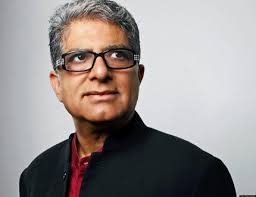
Deepak Chopra: Author, Spiritual Guide, Medical Doctor

Wisdom is bought at a high price - the price of experience.  We all essentially learn the hard way. How often have we heard our elders say that they went to the "school of hard knocks!"  One of my special needs students said the following the other day:  "Life does not get any easier; you just have to learn to laugh harder!"  Pure wisdom, that! The poetry, whether of the Psalms in the Old Testament or the poems in the Tao Te Ching, attempts to capture some wisdom by sheer dint of paradox or seeming contradiction; by setting up polar opposites; by stretching language to its breaking point.

Sometimes when we try too hard we don't achieve the results we want at all.  It's as if the ego gets in its own way and trips itself up.  The ego stretches itself up on tippy toes in a vain effort to see what's going on.  However, on a physical level, as we know, we are only able to maintain our bodies on tippy toes -  in such a stretched mode - for literally several moments as we strain say to look over a high fence.  On tippy toes we simply cannot stand firm. Anyone who runs or jogs will know that such exercise needs to be paced properly.  If the runner or jogger sets out on their chosen route at far too quick a pace. he will not be able to complete it in the proper time or indeed in the proper state of well-being.  Hence, the lapidary piece of wisdom in the above poem: "He who rushes ahead doesn't go far!"  I remember an old teacher I had at school used often say: "The longest way round is often the shortest way home!"  Why?  Well, the longest way round might not have as many obstacles as the shortest way!!
  
Clinical psychologist, Psychotherapist Dr Carl Rogers


I simply love the line: "He who tries to shine dims his own light."  Again, it appears to this reader and meditator that this is all about our ego getting in the way of the wisdom that naturally lives in our True Self (Deepak Chopra) or Real Self (Carl Ransom Rogers), in our Soul (religion/spirituality) or in our Heart of Hearts (traditional phrase meaning inner and true feelings).  It is so obvious when people are boasting of their abilities or attempting to get "one up" on us (one upmanship) or pretending to be something they are not.  Likewise, any person who thinks he can define himself clinically or precisely is simply deluded.  Just as the author puts it, this person "cannot know who he really is."  There is a mystery that lies at the heart of us all and we only gradually get to know that mystery.  Indeed, I believe we cannot really comprehend, apprehend or grasp that mystery in its entirety or fullness.  However, we do get glimpses of our True Self.

Then we come to one of the most corrupt impulses of the ego, namely the drive for power.  Persons who do not know themselves properly, or who have failed, as Carl Jung puts it, to properly integrate their shadow nature, all project their worst fears and hatreds onto others.  Hence we get breakdowns in the various relationships between husbands and wives, managers and staff, leaders and teams and indeed between different states.  When people exercise power over others in this egoic way they actually have failed to empower themselves to simply be their truest selves.  Likewise, if we cling to our work in an effort to gain some identity, we set up a state of dependence on our workaday activity to give us a sense of our true self and such a state of dependence only leads to a false sense of self!

Letting go is the answer, and indeed it is the answer given by all religious and spiritual traditions. What are we asked to let go of?  We are asked to let go of our Ego, of our desires to cling to sensual pleasures, to cling to others, to cling to ideas, to cling to our partners, to cling to our jobs, to cling to our pride, to cling to all false ideas of who we are.  We are asked, in short, to let go of the False Self and embrace our True Self.  This is not easily done, but by constant practice of meditation and other spiritual acts like writing, composing poems or music, sculpting, pottery making and so on and so forth, we gradually chip away at our masks and bit by bit expose our True Self to the light of our consciousness.  Indeed, none of us ever gets there.  Rather like the asymptote we only get there way out at infinity.

Example of two asymptotes: horizontal and vertical


Conclusion:

Once again, perhaps some word, phrase or clause in above poem strikes a chord with you.  If so why not use it as a mantra for a short meditative practice for five or ten minutes.  Namaste, my friends.

Wednesday, August 26, 2015

Thoughts on the Tao Te Ching 10

Can you coax your mind from its wandering
and keep to the original oneness?
Can you let your body become
supple as a newborn child's?
Can you cleanse your inner vision
until you see nothing but light?
Can you love people and lead them
without imposing your will?
Can you deal with the most vital matters
by letting events take their course?
Can you step back from your own mind
and thus understand all things?

Giving birth and nourishing,
having without possessing,
acting with no expectations,
leading and not trying to control:
This is the supreme virtue.


Commentary/Reflections

One of the central problems experienced by the neophyte meditator is that of all the mental distractions that race through the human mind when one attempts to still it.  This is what the poet means above by his term "the wandering mind." In that field of thought called philosophy of mind, there is an interesting question: Do our thoughts think us or do we think our thoughts?  That question never really engaged me early in my life even though I had heard it discussed in that area of philosophy concerned with the nature of the mind. However, it did hit me very strongly and existentially when I had a major breakdown, or indeed a break-through really, at the age of forty - that is, at the time of the typical midlife crisis brought to a point where Yeats says, "the centre cannot hold."  It was then that I experienced my mind being literally hijacked by my thoughts.  The centre could not hold whatsoever: the hub of control had totally disintegrated and the spokes of identity had shattered and scattered into chaos.  Thoughts ran riot in my mind and there was no controlling them.  The nerve-centre of my identity, or if you like, the core of my self had undergone a meltdown.  


Good mental health essentially means that the person is on the way to establishing an identity that is individuated (Jung), integrated (Storr) or actualized (Maslow et al).  In other words the person is as fully their real or true self as is possible: metaphorically we are a series of spokes (character qualities and traits) centred around a hub called the "Real Self" rotating on a unique path. None of us probably ever reaches the acme point in that process. Spiritually, the parallel term in Eastern philosophy would be "the enlightened mind."  The poem above is as deep as can be and has many layers of meaning as the language struggles to express the spiritual quest of life. Quieting or stilling the mind is a wonderful metaphor for getting under the chaos that our unstilled mind can be.  Spiritual writers speak about the task of achieving a Still Point below that agitated surface of existence.  In the above poem, this task is expressed in the words "original oneness."  Each couplet is another way of expressing the search for this elusive Still Point.


If a true pilgrim of the way or a faithful disciple of enlightenment achieves a position of leadership s/he will be able to "love people and lead them without imposing their will."  In other words, their ego will be firmly under control and integrated into their personality. They will have no need for petty jealousies, for "getting their pound of flesh," for settling old scores, for one-up-man-ship of any kind or for any sort of micro-management.  They will be visionary leaders able to bring their staff with them while allowing everyone the freedom to grow and to succeed on their own terms without interference.  Stepping back and not wishing to control things is central to good spiritual and indeed psychological development. We all learn quite quickly that the only people we can change are ourselves, never ever anyone else.  Some of us only learn that lesson painfully and the ego-ridden person makes that mistake all too often. And so, in light of these comments, the following lines from the above poem are worth repeating and reflecting on here:


Can you deal with the most vital matters
by letting events take their course?
Can you step back from your own mind
and thus understand all things?

Another way of saying this is that the person further on the road to enlightenment is getting ever more detached from the non-essential things of life; is getting nearer to that elusive Still Point of being; that primordial state of being our Taoist poem calls "the original oneness."

Saturday, October 18, 2014

Journal of a Soul 66

The Futility of Obsessional Searching


Galicia, Spain, not far from Allariz
Having observed at close quarters an ASD pupil who suffered from severe OCD was a great lesson for me in my life's journey.  Having encountered others since who have relatives with this mental ailment further convinces me of how disabling any form of obsession can be to us as individuals. Prior to this I was well used to encountering people and students with hosts of other problems from depression to schizophrenia, from anxiety to panic attacks and so on, and I knew how these were very crippling - indeed I have written many times in these pages and others about my own diagnosis of clinical or endogenous depression at the age of forty.  But the obsessional lesson, if I may be so bold as to call it that, was particularly enlightening.  At this juncture in my life as a 56 year old Special Needs Teacher, with a background in philosophy, theology and counselling as well as in the usual more academic subjects - Mathematics and Languages - I have been searching for the truth of who I am for longer than I care to remember. Every time I look back over my progress over this earthly pilgrimage I constantly observe that it was often during those periods when my search was most intense that the "answers" or at least the consolations were always surprisingly few, and that it was the times when I was not pushing myself so hard and so obsessively for answers that the so-called "answers" and consolations were surprisingly more.  As a writer I often find that this is also the case with inspiration - the muses come to us when they wish, in their own time as it were, and often don't come when we are obsessively searching for them.

Stream of Consciousness:

All too infrequently I do a written exercise in stream of consciousness composition where I just let the words roll onto the page without either censoring them or using any form of punctuation.  Punctuation would obviously be a way of hindering the flow as it would  be an obvious shaping or ordering of the words.  Those of my readers who are into literature will know that our great and wonderful Irish author James Joyce was a master of this technique. I was taught it several times over the years at various creative writing classes I attended. However, to cut to the chase here, let me add a brief extract from my most recent stream of consciousness exercise:
some flowers will appear like lotuses from the muck and gunk and bilge and all that slime and all that slime and somewhere deep within it there will be something fine formed like a poem coming to birth coming to a shape forming forming from all those Freudian depths from that cesspit from which rises the Self like some exotic phoenix (see Stream )
It would seem that everything is grist to the mill for a writer or shaper of words, indeed for any artist at all.  Furthermore, everyone is an artist in the sense that they are the shapers of their own lives, of their own Self. We have to learn to be unobsessive shapers of our lives, that is, we definitely have to learn to mould and shape our lives but we have to learn to do so in an unobsessive manner, that is, not in an obsessive manner that could certainly cripple us in our pursuit of real happiness.  That's the sense behind the quotation above from my recent stream of consciousness, that the Self does rise like an exotic phoenix if only we would learn "to go with the flow" of life and learn to tap into its overall energy.  Shaping our lives means going with the flow, pushing with the energy of life, not pushing against it. We certainly have to work and shape, mould and form our lives, often with the sweat of our brow, but always by going with the flow of the energy around us.  Obviously, this is never ever a sense of aimless drift - the exact opposite to what I am talking about here. Going with the flow is never the easy way out. It requires a level of honest effort, too.

Going with the Flow

Here I wish to say a little about the contemporary psychologist and psychotherapist Mihaly Csikszentmihalyi.  He discovered that we find genuine satisfaction during a state of consciousness that he called simply "Flow". In this state we are completely absorbed in an activity, especially an activity that involves our creative abilities. During this “optimal experience” we feel “strong, alert, in effortless control, unselfconscious, and at the peak of their abilities.”  Here, in the footsteps of Abraham Maslow, Csikszentmihalyi insists that happiness does not simply happen. It must be prepared for and cultivated by each person, by setting challenges that are neither too demanding nor too simple for ones abilities. The Pursuit of Happiness (see Here) website gives as an example of flow an advanced skier's conquering of a difficult slope.  We might add any other skill we have learnt, even typing these few words on my laptop.  We have to put in the effort obviously, and then allow ourselves to tap into the energy that's out there to enliven us.  Of course, going with the flow can involve all the simpler exercises like good conversation, listening, encouraging, helping, being compassionate, joining in the fun, playing a game and so on.  However, the major point here is that it is never a lazy drift that will lead nowhere.

Cziksentmihalyi defines flow as “a state in which people are so involved in an activity that nothing else seems to matter; the experience is so enjoyable that people will continue to do it even at great cost, for the sheer sake of doing it.” (Cskikszentmihalyi, 1990, p.4)
Allariz, Galicia, Spain

Again, I have experienced this state at work, most especially when I am involved in helping others cope with life; especially more recently where I have been called on to listen to the upset of a seventeen year old at his brother's hospitalization or of another's experience of depression. A more powerful experience of flow that I participated in (and I use these words deliberately as I felt that there was another power literally flowing through me) was that of visiting with a family who had been recently bereaved by a suicide of a young man of twenty - the essential topic of my last post here. My experience of being part of a flow of energy, of a higher power even, that I was somehow directing rather like a conductor of an orchestra was and is surely inspiring.  As I sat with that young man's friends and his family I knew I had to be there, felt drawn there, knew what I was about, could use all my organizing skills to their best to celebrate that young man's short life, to help support family and friends in their almost unspeakable grief.  Going with the flow is very empowering.  It does take courage but once you start the flow itself energizes you.

It would seem to me at this stage in my life's journey that (i) learning to search for meaning without obsession is a healthy thing to do.  Such a searching is something akin to, though not the same as, John Keat's famous concept of "negative capability" that he defined in his Letters as: that state of mind "when man is capable of being in uncertainties, Mysteries, doubts without any irritable reaching after fact and reason" (See Here) (ii) that being open to lessons from our own unconscious through dreams, visualizations, meditation exercises, yoga, singing, writing or art of all kinds  and (iii) going with flow are all valuable skills to learn so that we can begin to navigate the Ship of Self through the choppy seas of life if I may be permitted to use a somewhat extravagant though useful metaphor here.  One, of course, can use other descriptors for these suggested skills like soul, spirituality, Higher Power, Inspiration, God, Holy Spirit, Mysticism, Living in the "Now," and so on.  In the end, the language is a surface matter.  What really is important is the real-life experience of the energy of Flow.

Sunday, April 13, 2014

Journal of a Soul 50

Introduction: Towards the More in Humanity

Our winning all-Ireland Science debaters! Towards the More!
I've been arguing that the phenomenon of our consciousness in itself is a greater entity than the mere sum of the signals or perceptions we register on our brains.  Indeed, I have also been arguing that the mind in the sense of consciousness is also greater than that organ known as the brain in which it is said to mainly reside.  What our personhood or selfhood may be is also somehow linked to our consciousness of what or who that person or self may be.  These are major areas that can be learnedly discussed in philosophy, philosophy of mind, psychology, philosophical psychology, anthropology, philosophical anthropology, neurology and indeed in psychiatry and cognitive science. (I'm sure there are many other learned areas of study in cognate areas that I have not listed here!)  Indeed, the arts in general explore that complex area of self-identity through all the various creative media: painting, sculpture, architecture, music and writing in all its incarnations.  Come to think of it, we should not leave the sciences out either. After all, they too, share in the creative impulses that make up our human consciousness.  Maths, Engineering and Technology also capture on the one hand the beauty, magic and brilliance of the human mind as well as its sheer practical application to human affairs on the other.

In my last post, I spoke about human passions that mark us out as different from the other animals in the Animal Kingdom.  I referred to (a) our desire for knowledge, (b) our desire to love and (c) our desire to be loved as demarcating qualities.  There are others, too.  I briefly referred to our desire for peace and justice.  As Pope Paul VI put it rather pithily, peace is the work of justice.  Let me turn to this last desire or passion here as a demarcating trait of the human person.

The Desire for Justice

One thing that has always inspired me about human beings is their idealism that is shown in many ways, and most especially in their desire to see justice done.  That we are instinctively drawn to causes which promote justice is certainly undeniable.  The Civil Rights Movement, headed up by the late great Martin Luther King Jnr., great prophetic figure, is an excellent example of this human trait I am describing here.  Then, closer to home, we had the Civil Rights Movement in the North of Ireland which sought to do the same for the Roman Catholic population of North of Ireland as its sister movement had achieved for the black population in the USA.  People gave their lives, and still do give their lives in great numbers in all parts of the globe for causes that promote justice for all.  And why do it?  Why put your life on the line for the cause of justice among others, especially when you yourself have those rights that are denied to those for whom you fight?  Why?  Because you believe that there are some values that are universal, and that those values point to what is great and good in the human being; that those values transcend the person and are interpersonal and even trans-personal;  that they somehow point to an author of values beyond us, to an horizon of meaning beyond us*, and perhaps point to some Giver of values beyond us... perhaps.  I will leave these thoughts open to a possible greater meaning or horizon of values above and beyond us.  I will stay with that tentativeness because I just cannot prove this last observation one way or another.

In the wake of the Nazi atrocities committed against innocent people before and during World War II, it was hard for the Allies to convict the accused before their courts of justice at Nuremberg without appealing to a higher court than those of mere mortals.  It has always appeared to this writer here that without the atrocities committed by both Hitler and Stalin; that without, as it were, falling into the pit of sheer atrocity and knowing the sheer depths of depravity to which we humans can descend; that without plumbing the depths of human evil we should never have been inspired to conceive of, write and agree to the International Declaration of Human Rights in 1948.  Article 1 states:
  • All human beings are born free and equal in dignity and rights. They are endowed with reason and conscience and should act towards one another in a spirit of brotherhood.
We are all endowed with reason and conscience.  As to the nature of conscience the Declaration, needless to say, has nothing to say.  After all it is a international document listing and declaring solemnly the rights of all men and women everywhere in the world.  As to where that conscience comes from, this document does not state, nor should it, indeed, as it is neither philosophy, theology or ethical theory.  Perhaps like Newman, and Kant before him, that conscience could be the voice of a higher power, an author of such universal human rights, before whom in conscience we stand accountable.  Perhaps.  I'm not saying, obviously, that this is definitely so.  I am merely stating it and leaving it out there as one of some few main propositions on the matter.

The Power of Vision

The power of vision: St Vincent's celebrate victory in our School
Another characteristic that describes humanity, both in its essence and in its actions, is that of having a vision of how things could be if we dream big dreams of progress, not alone in technology per se, but in technology which has an ethical and humane dimension to it, namely to improve the lot of other human beings.  Undoubtedly, this is linked with the desire for justice, but here in this paragraph I wish to emphasize the visionary aspect of the desire, rather than the work of justice itself.  In other words, I am talking essentially about the same thing, but from a different perspective.

Vision belongs equally to the engineer the technologist as it does to the poet and novelist.  It belongs to all peoples, to all cultures, to all faiths and to all colours.  In short, it belongs to the man and woman in the street, no matter what their profession, or indeed, their lot in life.  Here, I am reminded by those wonderfully apt words composed by the great Irish writer, socialist and dramatist,  George Bernard Shaw (1856 -1950) in Back to Methuselah (1921): ' "You see things; and you say 'Why?' But I dream things that never were; and I say 'Why not?' '  For me as an Irishman, the first time I heard these words was in the famous speech of John F. Kennedy before the Irish Parliament or Dáil in June 1963.  In the context of his speech, he was highlighting the very heart of justice, which is essentially the work of democracy.  Both he and his extended family have not alone been associated with the Democratic Party in the USA, but with the work of justice on an international level in an effort to bring about world peace.  That the Kennedys passionately believed in the work of justice as central to the democratic process is without doubt.  That John F.Kennedy openly embraced the vision of The Civil Rights Movement and of its prophetic leader Martin Luther King Jnr is also beyond question.  That JFK's brother Bobby was the bearer of his brother's beacon of justice for all after the latter was assassinated is a question of historical fact.  However, that Bobby Kennedy was perhaps the more courageous and more passionately driven of the two is not without evidence.  That the two were assassinated for their beliefs in peace as the work of justice can never be denied.  Their assassination as the asssassination of Mohandas Gandhi, Ruth First and Martin Luther King Jnr., just to mention a few, happened because their outspokenness for justice and equality for all stepped on the toes of those powerful interests within all societies that look to exploitation of the weak and poor for their selfish aggrandisement.  This is all incontrovertible.  The human drive to a vision of how things could be, the innate drive for a Utopia almost lies at the very heart of human dreaming, it seems...

And yet, history teaches us the very sad lesson that while we have such visions of how things might be, in reality wars and injustices abound.  However, without such visionary drives in humankind as witnessed in the lives and sacrifices of great prophets for peace as the work of justice, we should be in even a worse state of moral disintegration.  There are so many prophets of peace who have paid the ultimate price for their vision besides those few whom I have named above, and, indeed, many of them are unacknowledged and many more unknown.  Their sacrifice has not been in vain, as many countless others have benefitted by their sacrifice by either achieving their freedom or in escaping from injustice with their lives.

A Final Word

And lastly, dear reader, how do we account for the courage of heroes putting their lives at risk for those of others?  Where does that fit into an atheistic or indifferentist scheme of things or in an agnostic Darwinian structuralist view of what we humans really are?  Or push the idea of heroism further, and one comes up with the actuality of someone sacrificing their lives for those of others, many of whom are unknown to the hero or sacrificial victim to put it in more religious terms, as it were? How do we explain this in the overall scheme of things? These are all big cultural questions, all big philosophical and anthropological questions. Perhaps they are even spiritual and religious questions.  One thing is sure, they are not cold scientific ones at any rate.  Whoever we are essentially is a work in progress, and sadly we find out more and more about that essence by experiencing how low at times some of us can stoop.