Showing posts with label Country. Show all posts

Sunday, September 18, 2016

Poems I Journey With 10


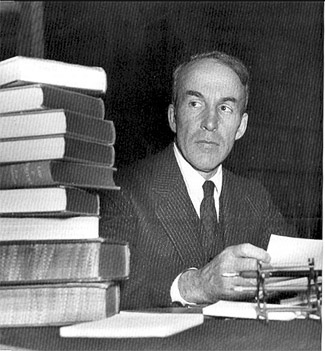
Archibald Macleish
Archibald Macleish (1892-1982) is a major modernist American poet and writer of the twentieth century, and I first discovered him through his critical writings, rather than through his poetry.  I have beside me as I write the first book I bought by him way back in 1978 when I was a mere twenty years of age.  That book is called Poetry and Experience (Harmondsworth: Penguin Books, 1961).  I remember being blown away by how easily he communicated to the reader his understanding of what poetry does and is.  In part one of that book, he discusses in a comprehensive way how poems work through sound, sign, image and metaphor.   In the second section of the book, Macleish treats of how what he has discussed in the first section functions in the works of Emily Dickinson, W.B. Yeats, Arthur Rimbaud and John Keats.  This book, consequently, would be a wonderful introduction to poetry appreciation for anyone wishing to learn more about how to read and enjoy it.

The Old Men in the Leaf Smoke

The old men rake the yards for winter
burning the autumn-fallen leaves.
They have no lives, the one or the other.
The leaves are dead, the old men live
Only a little, light as a leaf,
Left to themselves of all their loves:
Light in the head most often too.


Raking the leaves, raking the leaves,
Raking life and leaf together,
The old men smell of burning leaves,
But which is which they wonder – whether
Anyone tells the leaves and loves –
Anyone left, that is, who lives.

For me, it is the existential thrust of this poem that engages me as a reader.  I have already alluded to the psychiatrist Dr Irvin Yalom's listing humanity's awareness of its mortality as being one of the four great ultimate concerns in every human being's life.  Raking leaves is a perennial occupation for anyone with trees in their garden.  Growing up, it was one task I loved to do when I visited my country cousins and when I spent some three years as a would-be monk.  This poem uses the leaf as a symbol of the mortality of humanity and for the shortness and beauty of life.  I love the way Macleish speaks of "lives" and "loves" and "leaves" as they are, in effect, slight or partial rhymes as these words share the consonants "l," "v" and "s."  Such felicity of language enchants this reader, simple though this use of words is.

Repetition in the poem gives it a song-like sound.  As a country boy, I can almost smell the burning leaves as I have stood beside many a man burning dead vegetation in my time. Another riveting thing about this poem is its apparent simplicity that somehow draws us into the deeper mystery that life is.  It would seem that life is an amorphous mix of things in unity rather than a collection of random things.  When one rakes a garden one rakes many bits and pieces of vegetation and insect life and mud and clay together in a unity, and that unity in plurality suggests a mysticism at work in Macleish's sensitivity.  And this latter mystical sensibility is all too apparent to the perceptive and open reader.  Let's read the second stanza slowly and meditatively with the thoughts and sensitivities of this paragraph in mind:

Raking the leaves, raking the leaves,
Raking life and leaf together,
The old men smell of burning leaves,
But which is which they wonder – whether
Anyone tells the leaves and loves –
Anyone left, that is, who lives.


Mystically and linguistically leaves and lives and loves are all somehow magically one.  We are one with the poet raking them together as we live. On the one hand, then, this is a sad and depressing poem, and yet, on the other, this is a poem that suggests that we are part of the great cycle of nature, and we are ennobled by being part of it, never lessened, as, after all, we are the ones who do the raking.  We are the ones who do the maintenance on the garden.  We, in our turn, will become old men or old women, as the case may be, and we will surely smell of leaves and loves and lives.  Then, the beauty of the poem is that it does not state too much.  It connotes rather than denotes, and that is a wonderful device at the very heart of poetry.  Mystery, mystique, wonder and magic are always beyond capturing in prose.  They are more readily captured but never subdued or crushed in poetry.  That's why the last stanza defies paraphrase, which is surely anathema to anyone with a poetic sensibility.

Friday, September 16, 2016

Poems I Journey With 8

Back in the good old days we had to learn many poems off by heart as learning by rote was still in the ascendant in the mid-seventies of the last century. Ireland has given birth to legions of poets, and the author I am celebrating here tonight, one Patrick Kavanagh remarked that at any one time our country could boast of a standing army of some 10,000 poets. W.B. Yeats, Patrick Kavanagh, Thomas Kinsella and Austin Clarke were the four major Irish poets we studied at school. Tonight I want to discuss Patrick Kavanagh's great poem "Stony Grey Soil" which we studied for our Leaving Certificate.

Patrick Kavanagh


Stony Grey Soil
O stony grey soil of Monaghan
The laugh from my love you thieved;
You took the gay child of my passion
And gave me your clod-conceived.

You clogged the feet of my boyhood
And I believed that my stumble
Had the poise and stride of Apollo
And his voice my thick-tongued mumble.

You told me the plough was immortal!
O green-life-conquering plough!
The mandril stained, your coulter blunted
In the smooth lea-field of my brow.

You sang on steaming dunghills
A song of cowards' brood,
You perfumed my clothes with weasel itch,
You fed me on swinish food

You flung a ditch on my vision
Of beauty, love and truth.
O stony grey soil of Monaghan
You burgled my bank of youth!

Lost the long hours of pleasure
All the women that love young men.
O can I still stroke the monster's back
Or write with unpoisoned pen

His name in these lonely verses
Or mention the dark fields where
The first gay flight of my lyric
Got caught in a peasant's prayer.

Mullahinsa, Drummeril, Black Shanco -
Wherever I turn I see
In the stony grey soil of Monaghan
Dead loves that were born for me.

Commentary

Rare colour photo of Patrick Kavanagh
We all at one time or another have a love-hate relationship with the city,  town, village, townland or countryside where we were born.  We are never happy with our progress in life and we often blame our native place for the singular lack of opportunity it offered us as young people.  We also, of course, blame our family of origin which is naturally enough specifically rooted in our birthplace.  When I studied the Irish Gaelic language we were told that the great Irish Gaelic poet Seán Ó Ríordáin had a propensity to compose compound words or "chomhfhocail" as we called them in that language.  Kavanagh uses a similar technique in his poems by using his own compound or hyphenated words, viz., "clod-conceived," "thick-tongued" and "green-life-conquering." I especially liked, as a youngster studying this poem, Kavanagh's use of the literary devices of personification (where his Monaghan farm home is addressed directly as a person) and apostrophe (addressing someone or something that is simply not there in front of one). Also "Stony Grey Soil" is written in a form somewhat akin to that of the ballad as the poem contains stanzas of four lines each even though Kavanagh does not stick rigidly to the rhyming schemes of the traditional ballad.

However, for me the strongest feature of this poem, as of virtually all of Kavanagh's poetry, is the strength or force of his simple and direct imagery. Such strong imagery is evidenced practically in very line and indeed in the very title which occurs as a repeated line that has the effect of a chorus of lament.  A list of images is always easy to make in any poem by our author: "stony-grey soil," "gay child of my passion," "clod-conceived," "clogged," "stumble,"  "stride of Apollo," the named parts of the plough, "lea-field" and so on.  I shall not bore the reader with listing them for the whole poem as he or she can easily do that for themselves.

This poem is steeped in regret for his lost opportunities as a poet and as a human being since as a young man he dedicated himself to the land rather than to his métier as a poet or as a lover or suitor for young women.  The poem then becomes a lament for his predicament, that is, having wasted his youth.  That sentiment is stated very strongly and bitterly in the following lines packed with clear imagery:

O stony grey soil of Monaghan
You burgled my bank of youth!

I also particularly love the traditional format and nature of this poem.  It was long a tradition in Irish Gaelic poems to list off the names of townlands and towns as in the tradition of the "dindshenchus" as is exemplified in the final stanza.

Again, there are references to religion, God, but not the Church as in the following five lines:

Or write with unpoisoned pen
His name in these lonely verses
Or mention the dark fields where
The first gay flight of my lyric
Got caught in a peasant's prayer.

It is the "peasant's prayer" or natural or instinctive spirituality that appeals to Kavanagh. That is at once Pagan Celtic as well as Catholic or Christian.  Then there is the paradox that exists at the very heart of life, namely "dark fields" that might suggest something profoundly ungrounding and unnerving like the "dark night of the soul" and yet it is placed side by side with "the gay flight of his lyric" that somehow was caught up in a peasant's prayer rather than a poet's book of promise.

Finally the line "Dead loves that were born for me" is distinctly depressing and profoundly disturbing.  That the ballad format is used for this poem is also good as it is able to carry the lament and regret from his misspent youth and the lost opportunities he might have had, had he been luckier in life.