|
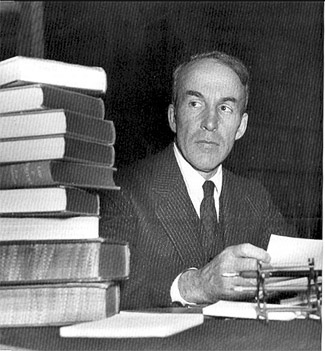
| A young Adrienne Rich |
I like reading new
and unusual poems from as many different cultural backgrounds as the English
language will allow me. The poem I wish to offer for the reader’s perusal and
reflection is one by the American Jewish poet Adrienne Rich (1929 – 2012). The
following poem I loved for its clarity of expression and for a new, if unusually
realistic, insight into love that I had never actually considered before.
Poems, like all good literature, should break new ground both in language and
form, in content and ideas. This, Rich does with an ease that almost camouflages her
consummate skill as an author. The poem I have chosen here is called “Translations.”
Translations
December 25, 1972
December 25, 1972
You show me the
poems of some woman
my age, or younger
translated from your language
my age, or younger
translated from your language
Certain words
occur: enemy, oven, sorrow
enough to let me know
she's a woman of my time
enough to let me know
she's a woman of my time
obsessed
with Love, our
subject:
we've trained it like ivy to our walls
baked it like bread in our ovens
worn it like lead on our ankles
watched it through binoculars as if
it were a helicopter
bringing food to our famine
or the satellite
of a hostile power
we've trained it like ivy to our walls
baked it like bread in our ovens
worn it like lead on our ankles
watched it through binoculars as if
it were a helicopter
bringing food to our famine
or the satellite
of a hostile power
I begin to see that
woman
doing things: stirring rice
ironing a skirt
typing a manuscript till dawn
doing things: stirring rice
ironing a skirt
typing a manuscript till dawn
trying to make a
call
from a phonebooth
from a phonebooth
The phone rings
endlessly
in a man's bedroom
she hears him telling someone else
Never mind. She'll get tired.
hears him telling her story to her sister
in a man's bedroom
she hears him telling someone else
Never mind. She'll get tired.
hears him telling her story to her sister
who becomes her
enemy
and will in her own way
light her own way to sorrow
and will in her own way
light her own way to sorrow
ignorant of the
fact this way of grief
is shared, unnecessary
and political.
is shared, unnecessary
and political.
The Briefest of Commentaries
 |
| An older Adrienne Rich |
I love people who push against convention, not in an anarchic
sense, I hasten to add, but in a well thought-out and considered fashion. They
are, of course, correct in their presuppositions, intuition and consequent
reasoning, because, after all, nothing in the world is either “black or white,”
or “cut and dried.” Rich belongs to this marvellous group of questioning
authors who push against convention, not to bring the state of things to a
crisis or to a state of collapse, but to advance a broader more inclusive
agenda. Rich was married, and with her husband, who ended his life at a
tragically young age of 45, parented three sons. In her late forties she began a
lesbian relationship with Jamaican-born novelist and editor, Michelle
Cliff, a relationship which lasted until her death. So her experiences of life
were broad and unconventional.
What I like above this poem is that there are many renditions that
could be given of poems from one language to another. Such renditions will
depend upon the understanding of the text by the particular translator. Let us
be aware of how we translate or interpret things, Rich seems to be saying to
me. Let me not look on life solely from my own perspective. Let me try and see
it through another optic if I can at all. I also like the conversational tone
of the poem. Rich draws us into the conversation as she addresses the reader
(her lover, her companion, her friend or whoever) in the second person
singular. The following four lines leap
off the page for me:
Certain words
occur: enemy, oven, sorrow
enough to let me know
she's a woman of my time
enough to let me know
she's a woman of my time
obsessed
Ah yes, I recognise such a woman myself in my mother and in many
of the women whom I have met in my time: women who baked for and in love; who
fought for and in love; women who were sorrowful because they suffered much in
loving. Then, the single word “obsessed” that has its own line, indeed, its own
stanza all to itself is most apt indeed. Women are obsessed, and then she tells us with what in
the first word of the next stanza, should we ever be in doubt. Of course, that obsession is with Love. That
very stanza is worth reproducing here again for our timely reflection:
with Love, our
subject:
we've trained it like ivy to our walls
baked it like bread in our ovens
worn it like lead on our ankles
watched it through binoculars as if
it were a helicopter
bringing food to our famine
or the satellite
of a hostile power
we've trained it like ivy to our walls
baked it like bread in our ovens
worn it like lead on our ankles
watched it through binoculars as if
it were a helicopter
bringing food to our famine
or the satellite
of a hostile power
There is a marvellous mix of observation of all womanly occupations
and preoccupations with her personal experience in this poem. As well as the
usual occupations like ironing and household tasks we have the image of a woman
typing a manuscript till dawn – a definite experience personal to a poet. Then, like the scene from a film, we are presented with the image of a woman trying to
communicate with her ex-lover by phone. Again this scene is cinematic in
quality:
The phone rings
endlessly
in a man's bedroom
in a man's bedroom
she hears him telling someone else
Never mind. She'll get tired.
hears him telling her story to her sister
Never mind. She'll get tired.
hears him telling her story to her sister
Here we have an account of the man’s disloyalty, and indeed his
betrayal of her to her sister to add salt to the wound of love. And yet all
this grief, or indeed much of it, is caused by the narrow ageements accepted
by more conservative society, by a politics of narrow conventions. There is
much freedom pointed to in this poem. We, as readers, are invited to ponder
these social conventions critically and to question our own prejudices and
presuppositions. Such is the task of all good literature and certainly that of
all good poetry:
Never mind. She'll get tired.
hears him telling her story to her sister
hears him telling her story to her sister
who becomes her
enemy
and will in her own way
light her own way to sorrow
light her own way to sorrow
ignorant of the
fact this way of grief
is shared, unnecessary
and political.
and political.